

BunkerProof · Supercargo Registry
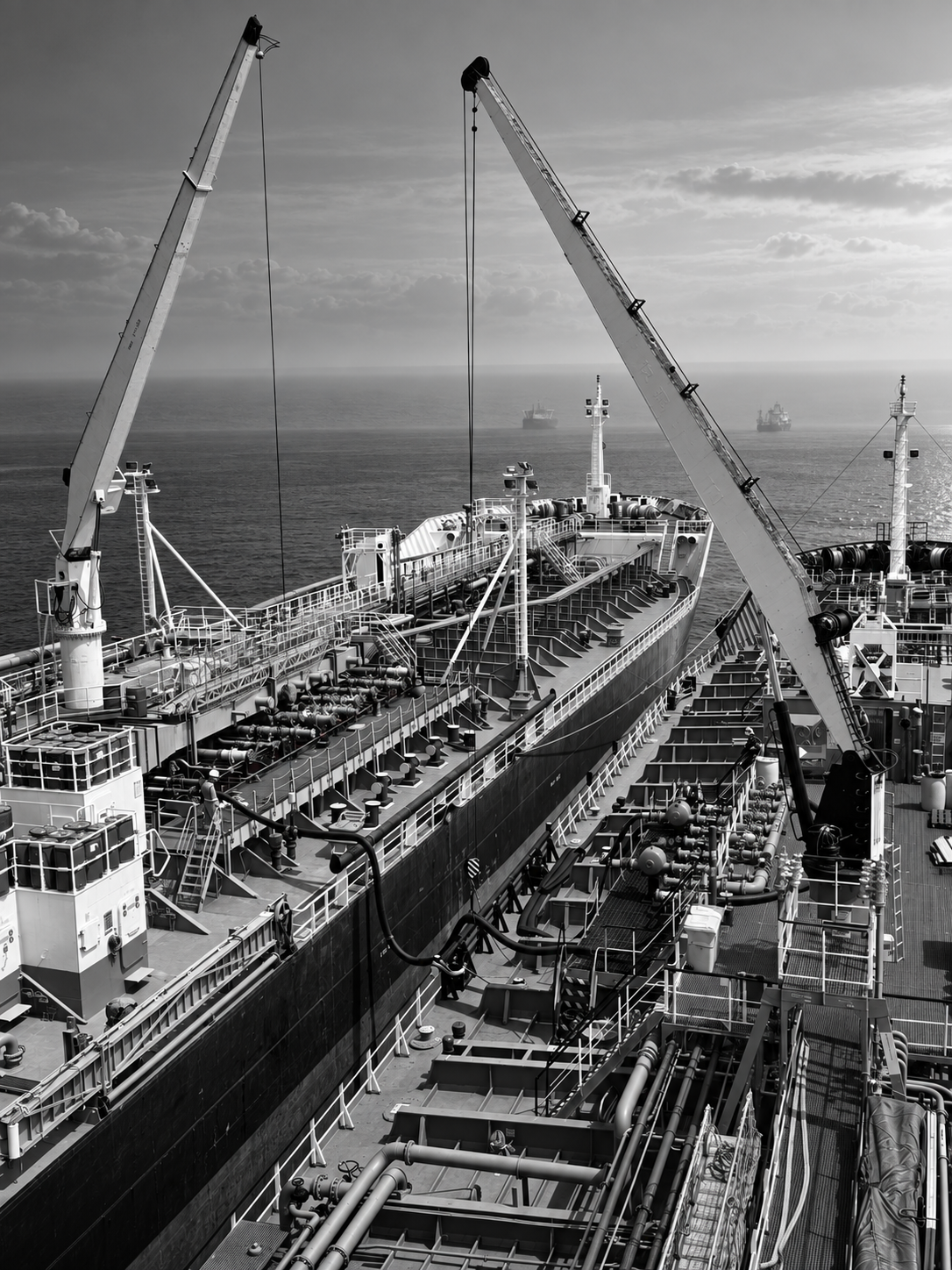
Aerial deck view of two tankers connected by a bunker hose during ship-to-ship transfer

Bunker supercargo services, kept to the letter.

Experienced Masters and Chief Officers supervising the bunkering operation on your behalf — quantity under control, losses prevented, every figure verified.

Supercargo who have stood the watch themselves

All our Supercargo are experienced maritime professionals, including former and active Masters and Chief Officers, with extensive practical experience in vessel operations, cargo handling and bunkering operations.

Their extensive sea-going background enables them to understand the operational challenges faced by Masters, Chief Officers and crew and to provide professional, independent and practical supervision throughout the bunkering operation.

Our Supercargo act as an independent operational control layer between the receiving vessel, bunker barge, terminal and other parties involved in the operation, helping clients improve quantity control, prevent losses, reduce operational delays, strengthen documentation and minimize the risk of claims and disputes.

A

Sea-going background

Former and active Masters and Chief Officers who know the operation from the bridge to the engine room.

B

Independence

No commercial stake in the bunker trade — findings serve the owner alone.

C

Evidence

Figures, photographs and records documented and available if a claim follows.

Bunker supercargo services

Thirteen areas of attendance, each logged, cross-checked and signed off by one accountable presence on board.

  1. 01

    Cargo control

    Control of cargo quantity during loading and discharging.

    • Verification of opening and closing figures
    • Cross-checking shore figures, barge figures, MFM readings and tank measurements
    • ROB verification before and after the operation
    • Identification of shortages, unexplained losses and discrepancies
  2. 02

    Cargo theft / loss prevention control

    Prevention and detection of cargo theft, diversion and unexplained losses.

    • Monitoring for unauthorized removal, diversion or transfer of fuel
    • Quantity control throughout the entire supply chain: terminal → barge → receiving vessel
    • Verification of tank levels and meter readings
    • Verification of seal numbers and seal condition
    • Identification and documentation of suspicious deviations
    • Photo and documentary evidence collection
  3. 03

    Bunkering operation control

    Supervision of the entire bunkering operation from preparation to completion.

    • Readiness verification before commencement, duly filled check lists
    • Control of hose connection and disconnection, proper blowing
    • Monitoring the start and completion of fuel transfer
    • Monitoring flow rate, pressure, temperature and MFM/FM data
    • Verification of compliance with the agreed bunkering procedure
  4. 04

    Bunkering efficiency improvement

    Shorter operations, less idle time and more deliveries per shift.

    • Analysis of total bunkering duration
    • Identification and reduction of excessive waiting time
    • Optimization of connection and disconnection procedures
    • Optimization of the sequence of operations
    • Monitoring of fuel transfer rates
    • Identification of operational causes of delays
    • Reduction of barge and receiving vessel idle time
    • Increasing the number of bunkering operations a barge can perform per shift/day
  5. 05

    Captain / crew assistance

    Practical support on deck, especially where bunkering or STS experience is limited.

    • Pre-bunkering briefing for the Master and crew
    • Assistance to the Master and Chief Officer during bunkering preparation
    • Bunker checklist prior to commencement
    • Support during vessel approach and commencement of bunkering
    • Coordination of communication between the bunker barge and receiving vessel
    • Assistance during critical stages of the operation
    • Particularly valuable for Masters and crews with limited experience in bunkering and STS operations
  6. 06

    Quantity verification

    Independent confirmation of what was actually delivered.

    • Independent verification of the actual quantity delivered
    • Cross-checking figures, tank measurements and BDN
    • Calculation of discrepancies and variances
    • Immediate notification of any significant deviation
  7. 07

    Quality & sampling control

    Representative samples, sealed and traceable, with the chain of custody under control.

    • Control of proper sampling procedures
    • Verification that representative samples are obtained
    • Inspection of sample bottles and seals
    • Recording and verification of sample numbers
    • Control of the chain of custody
    • Coordination of laboratory analysis when required
  8. 08

    Documentation control

    Every record complete, consistent and ready if a claim follows.

    • Bunker Delivery Note (BDN)
    • MFM/FM reports
    • Tank measurement reports
    • Sampling records
    • Seal records
    • Statement of Facts (SOF)
    • Time logs
    • Photographic records
    • Preparation of a complete Bunkering Operation Report
  9. 09

    Claims & dispute prevention

    Evidence collected during the operation, while facts and measurements are available.

    • Immediate documentation of discrepancies
    • Preparation of a complete evidence package
    • Support in quantity and quality claims
    • Analysis of the causes of losses and discrepancies
    • Prevention of unjustified claims and commercial disputes
  10. 10

    Operational reporting

    After each bunkering operation, the client receives a concise operational report covering:

    • Quantity ordered
    • Quantity loaded
    • Quantity delivered
    • ROB
    • MFM/FM figures
    • Tank figures
    • Variance
    • Total bunkering duration
    • Waiting time
    • Delays
    • Quality / sampling status
    • Detected irregularities
    • Photographic evidence
    • Final assessment
  11. 11

    Bunkering equipment inspection & certification control

    Equipment and certificates verified fit for the planned operation, before it begins.

    • Inspection of bunkering equipment before the operation
    • Verification of equipment certificates and validity
    • Verification of MFM calibration certificates
    • Verification of bunker hose certificates, pressure tests and inspection records
    • Inspection and control of other critical bunkering equipment
    • Verification that equipment is suitable for the planned bunkering operation
    • Identification of expired, missing or invalid certificates
    • Documentation of equipment condition and deficiencies
    • Immediate notification to the Master / operator in case of non-compliance
    • Stock control and reporting of seals, bottles, cubitainers, stickers and other operational consumables
  12. 12

    Fuel blending & compatibility advisory

    Professional advice on blending operations, ratios and fuel compatibility.

    • Assessment of planned blending operations and required blending ratios
    • Recommendations on appropriate blending ratios based on available fuel grades and operational requirements
    • Advice on the correct sequence of adding different fuel components
    • Recommendations regarding mixing duration and circulation time
    • Assessment of potential compatibility issues between different fuel grades
    • Monitoring of blending operations to ensure proper and homogeneous mixing
    • Advice on sampling before, during and after blending where required
    • Identification of potential risks such as incompatibility, sediment formation, stability issues and filter/purifier problems
    • Preparation of blending recommendations and operational guidance for the Master, Chief Engineer and bunker operator
  13. 13

    Tank condition & preparation advisory

    Tanks inspected, prepared and allocated before bunkering — contamination avoided.

    • Inspection and assessment of fuel tanks prior to bunkering
    • Advice on tank preparation after previous HFO, VLSFO, MGO/MDO or other fuel grades
    • Assessment of tank cleanliness and suitability for receiving the planned fuel
    • Identification of potential contamination risks from previous cargo/fuel residues
    • Advice on tank segregation and selection of suitable tanks for different fuel grades
    • Recommendations regarding tank preparation, draining and cleaning where required
    • Assessment of potential compatibility risks between previous and new fuel grades
    • Advice on avoiding contamination, off-specification fuel and operational problems
    • Recommendations for proper tank allocation before bunkering
    • Documentation of tank condition and identified deficiencies
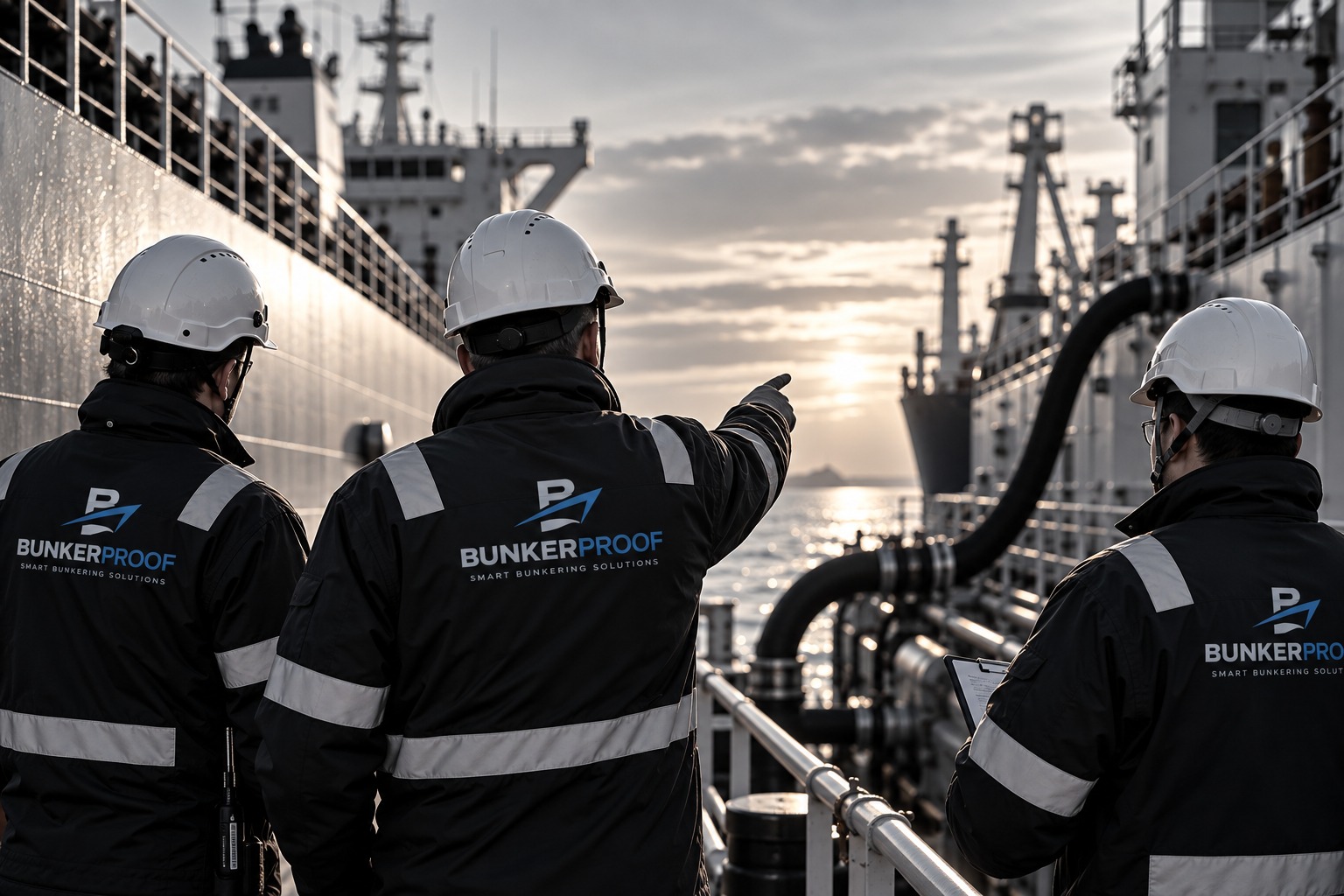
BunkerProof supercargo team on deck during bunkering operations
Onboard attendance — bunkering operationsBunkerProof

Technical vessel assessment & measurement control

Our Supercargo team reviews the technical characteristics of the vessel and the bunkering arrangement, so that quantity measurements and operational procedures are properly understood and controlled.

Vessel & fuel system

  • Review of technical specifications relevant to bunkering
  • Assessment of the fuel oil system, tank configuration and piping arrangement
  • Review of tank capacities and tank calibration tables
  • Verification that calibration tables match the actual vessel configuration

Sampling & measurement

  • Review and identification of all available bunker sampling points
  • Assessment of location, accessibility and suitability of sampling points
  • Review of sounding / ullage arrangements and measurement methods
  • Cross-checking of tank measurement procedures against calibration tables
  • Assessment of measurement equipment and its condition

MFM & interfaces

  • Review of MFM installation, configuration and technical documentation
  • Verification of MFM calibration and certification records
  • Review of bunker hose connection arrangements and vessel interfaces
  • Assessment of the bunker manifold and connection configuration

Findings & recommendations

  • Identification of technical limitations or operational restrictions
  • Review of previous bunker records for recurring discrepancies
  • Identification of potential sources of measurement error
  • Technical recommendations to the Master, Chief Officer and Chief Engineer
  • Documentation of deficiencies and corrective action

The people behind the control layer.

Captain Anton Krjutskov, Master Mariner | Co-FounderMaster Mariner | Co-Founder

Captain Anton Krjutskov

With 30 years of international experience in the oil and chemical tanker fleet, Captain Anton Krjutskov brings extensive hands-on expertise in bunkering, STS and cargo operations.

His career is built on real sea-going responsibility, operational decision-making and direct involvement in complex maritime operations.

Real sea-going experience.Practical expertise.Independent control.

Jürgen Malm, Managing Director | Co-FounderManaging Director | Co-Founder

Jürgen Malm

Jürgen Malm brings 12 years in the shipbuilding industry, leading skilled technical teams and client relationships across European project contracts.

At BunkerProof he leads client relationships and project delivery, ensuring every attendance is planned, resourced and reported to the same standard.

Team leadership.Client commitment.

Partnerships built on trust.
Commitment driven by expertise.

We believe strong partnerships are built on trust, transparency, and a deep understanding of our customers’ operations. With extensive maritime experience, we provide independent and professional support across bunkering and cargo operations.

From operational control and quantity verification to loss prevention and efficiency improvement, our team works alongside our clients to protect their interests, reduce operational risks, and add measurable value.

BunkerProof — your experienced partner in safer, more transparent and efficient bunkering operations.

Arrange a supercargo attendance

Tell us your company, required service and contact details.

We will confirm scope and availability, and hold the date.